
THE FOUNDER
The Healthcare System Wasn’t Built for Families Like Yours.
So I’m Built Something That Is
Tony Mathews, MD, MPH
Dual fellowship trained ○ Preventive Cardiology ○ Endocrinology.
Quadruple board certified ○ Internal Medicine ○ Endocrinology ○ Obesity Medicine ○ Clinical Lipidology
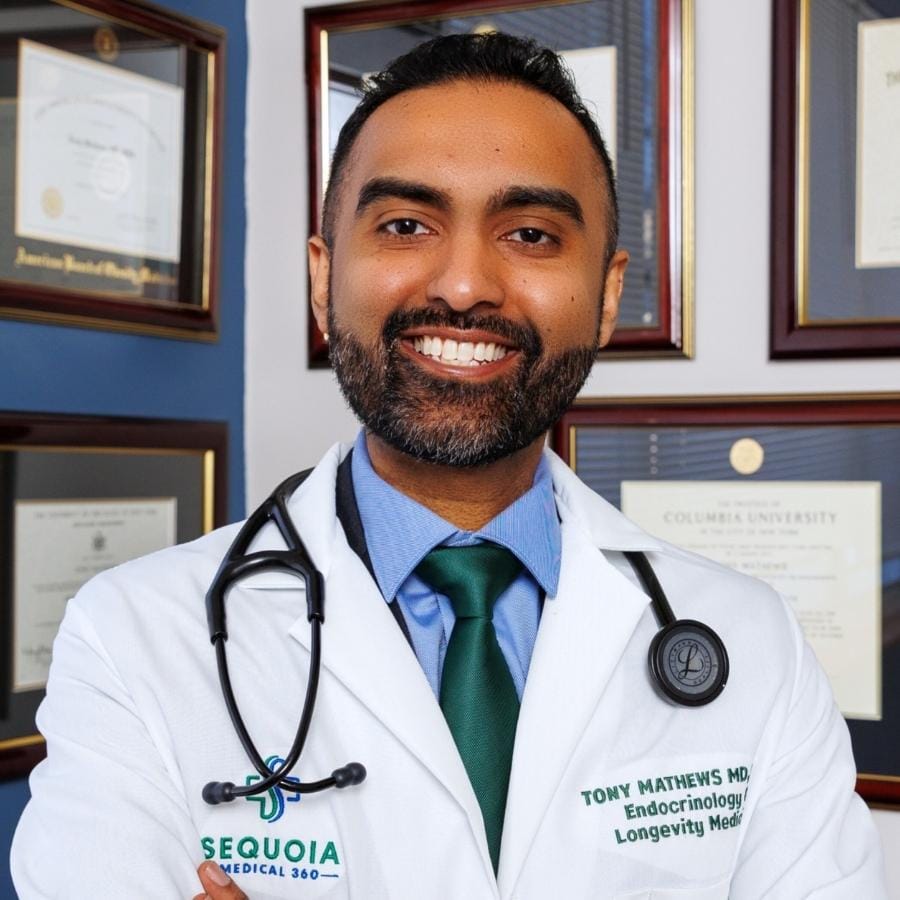
Dr. Tony Mathews, MD, MPH — a quadruple board-certified Endocrinologist and Longevity Medicine specialist at Sequoia Medical 360 in Bronxville, NY.
Why I Built Sequoia Medical 360
The Call That Changed Everything
The call came unexpectedly. My father had suffered a heart attack. As a medical student, I understood the anatomy and the statistics. But nothing prepares you for watching someone you love become a patient.
He survived. That moment forced a truth into focus. Crisis is often the first visible symptom. The conditions that shorten lives, including heart disease, metabolic dysfunction, and stroke, rarely appear suddenly. They develop silently over years. By the time the system reacts, the window for meaningful prevention is often narrower than most people realize.
It Became Personal
My awakening wasn’t just professional. It was personal.
In a demanding season of long hours and chronic stress, I recognized early metabolic risk in my own physiology. That experience reinforced something I now see repeatedly in high-performing lives. Information is not the limiting factor. Governance is.
Over time, applying the same principles I now use in my work, including metabolic strategy, endocrine precision, and cardiovascular prevention, changed my trajectory. The most meaningful change was clarity. Health improves when decisions are sequenced and follow-through is sustained.
Sequoia was built to replace reactive events with year-round governance.
Where It Started
In high school, I entered a NASA-sponsored science competition almost on a whim. My team won three consecutive national awards, designing experiments that launched aboard NASA rockets. I learned early that science is not just knowledge. It is a tool to solve meaningful human problems.
That mindset carried me toward engineering and later Brooklyn College EMS. Rising to Chief of Operations of a fully volunteer ambulance service taught me what no classroom could. Behind every vital sign is a person who deserves to be seen.
Three Lenses That Shape Your Care
Standard training often forces physicians to view a patient through a narrow frame. My public health and dual-fellowship training gave me a wider one. Sequoia is built on three lenses:
1. Public Health (Systems Thinking)
Most care treats the symptom; public health treats the system upstream. I apply that mindset to the individual—auditing the “environment” of your physiology: sleep, stress, nutrition, training, and recovery—because that environment is where risk is created or reduced.
2. Endocrinology (The Metabolic Root)
Hormones and metabolism shape energy, body composition, inflammation, and long-term risk. Endocrinology taught me to identify early metabolic dysfunction—often long before standard thresholds are crossed—and to correct it with precision rather than generic advice.
3. Preventive Cardiology (Risk Stratification)
The absence of symptoms is not the absence of risk. Preventive cardiology trained me to go beyond “normal” ranges, using advanced interpretation and selective diagnostics to identify vascular risk early—while it is still modifiable.
Sequoia was built on one conviction:
Risk is a trajectory.
My work is to identify it early and change it with you.
Why the Traditional System Fails
Even with this training, the traditional system isn’t built for depth or continuity. Visits are rushed. Prevention is secondary. Incentives reward throughput over synthesis. Physicians are forced to choose between documentation and thoughtful analysis.
I built Sequoia to be the opposite.
See how this shaped Our Philosophy →
See how this shaped The Sequoia Standard →
Outside the Clinic
Precision anchored by perspective
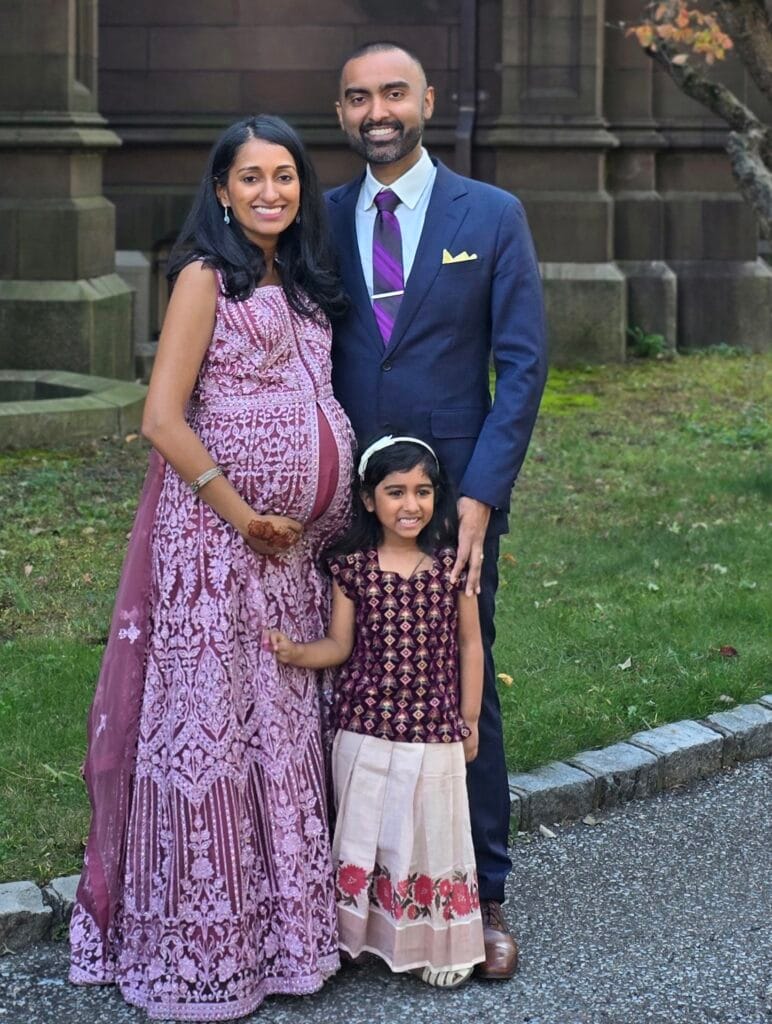
When I am not navigating metabolic strategy, I enjoy:
Education & Training
Board Certifications
Publications & Research
Dr. Mathews has authored peer-reviewed research and presented nationally in areas spanning nutrition, endocrinology, preventive cardiology, diabetes management, and metabolic health. His academic work reflects the same focus that shapes his clinical practice: understanding risk early, improving metabolic resilience, and advancing preventive strategies that help patients live longer, stronger lives.
I’d Welcome a Conversation
If you value depth, continuity, and a physician who holds the full picture for your family, request an introduction. It’s a brief call to determine whether the fit is mutual.